Ants That Bite: Identification, Reactions, and Treatment
Biting ants produce painful effects on human skin. Understanding biting ant species and effective bite treatment protocols will significantly improve your experience. This guide provides comprehensive identification guidance for ants that bite, along with treatment information and prevention strategies.
- Learn to identify biting ants, including fire ants, harvester ants, and carpenter ants, as well as related insects like bees and wasps, for effective prevention and management of painful bites and stings.
- Ant bites and stings produce various reactions in people, ranging from mild inflammation to severe allergic reactions, with treatment options spanning from home remedies to professional medical care.
- Protect yourself from ant bites by avoiding nests, wearing protective clothing, and using insect repellents. For severe infestations, consult professional pest control services.
Identifying Ants That Bite
Humans face bites and stings from fewer than 12,000 ant species worldwide. The painful effects stem from their biting or stinging behaviors, which cause a range of symptoms. Identifying ants that bite or sting allows for better control and prevention of painful encounters.
The primary biting ant species include fire ants, harvester ants, and carpenter ants. Each species has distinct characteristics and behaviors to recognize.
Fire Ants
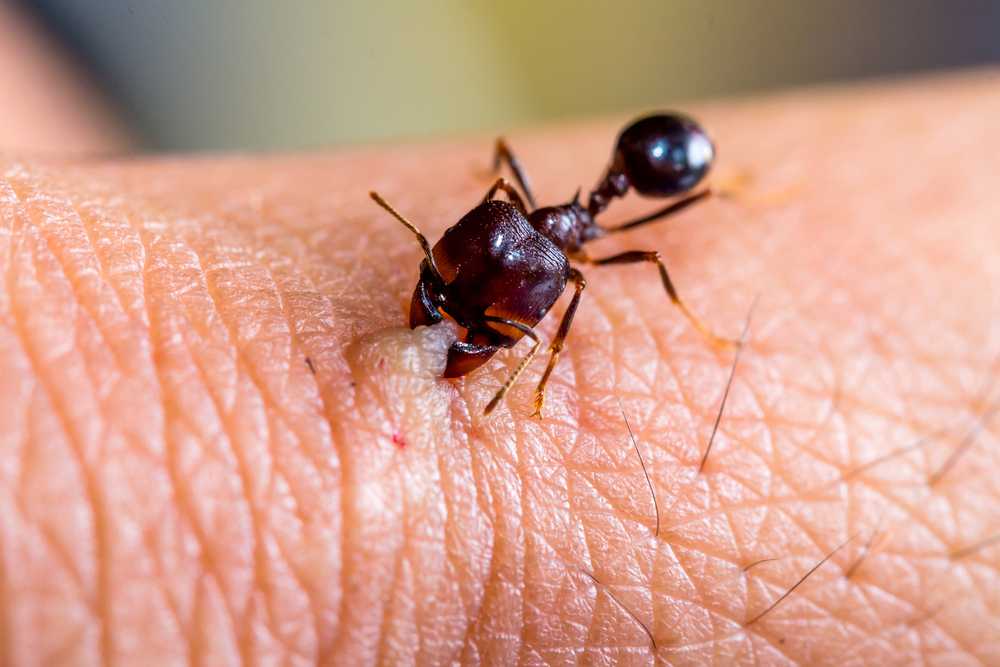
Fire ants are notorious for their aggressive nature and painful fire ant bites and stings. Female ants use their mandibles to bite and then inject venom through their stinger, causing intense pain and a burning sensation. The venom can trigger severe allergic reactions in sensitive individuals.
These reddish-brown ants build large ant mounds made of soil, sometimes reaching heights of 18 inches. To avoid multiple stings, stay clear of their nests and ant mounds.
Harvester Ants
Harvester ants deliver painful stings by grasping with their mandibles and injecting venom with their stingers. Their stings cause intense pain and can lead to swelling and redness.
Their nests are often small soil or sand mounds found in dry, open environments, making them easier to identify and avoid.
Carpenter Ants
Carpenter ants primarily bite and spray formic acid as a defense mechanism, causing mild swelling and skin irritation. Although their bites are less painful than fire ant stings, they can still cause discomfort.
Carpenter ants nest in moist or decaying wood, often in black or dark brown structures. Identifying their nests helps reduce the risk of bites and structural damage.
Symptoms of Ant Bites and Stings
Ant bites and stings cause a range of symptoms from mild skin irritation to severe allergic reactions. Common symptoms include:
- Redness
- Swelling
- Itching
- Mild irritation
These symptoms can persist for several days. Severe reactions may require immediate medical attention.
Ant bites and stings typically cause sharp pain followed by burning sensations. Local symptoms include redness, swelling, itching, and inflammation, usually lasting less than 24 hours.
Fire ant stings often result in raised welts or white pustules at bite or sting sites, which require careful treatment to avoid infection.
Delayed symptoms may include prolonged itching, fluid-filled blisters, and discomfort lasting several days. Monitoring the affected area is important, and if symptoms worsen, seek medical attention immediately.
Severe Allergic Reactions
Severe reactions to ant venom can include difficulty breathing, swelling of the face or throat, dizziness, and hives. These symptoms may indicate anaphylactic shock, a life-threatening condition requiring urgent medical care.
Children and individuals with sensitive immune systems are particularly vulnerable to severe reactions and should be closely monitored after ant bites or stings.
Treating Ant Bites and Stings
Most ant bites and stings cause minor discomfort and heal with minimal intervention. However, managing symptoms and preventing infection are essential.
Home Remedies
- Wash the affected area with soap and water or a cold washcloth to remove venom and reduce infection risk.
- Apply a cool compress or ice pack to reduce swelling and numb pain.
- Use over-the-counter antihistamines and anti-itch creams to relieve itching and inflammation.
- Avoid scratching the bite or sting sites to prevent infection and worsening symptoms.
Medical Treatments
Seek medical care if symptoms worsen or if a severe reaction occurs. Healthcare providers may prescribe medications or recommend carrying an epinephrine injectable pen for individuals with known allergies to ant venom.
Proper hygiene and care of the bite or sting site reduces the risk of infection. Regular cleaning with antiseptic creams and avoiding irritants promotes healing and minimizes complications.
Preventing Ant Bites and Stings
Identify and steer clear of ant nests and ant mounds. Fire ants and other biting ants build visible soil mounds that indicate their presence. Awareness of these areas helps prevent painful encounters.
Wear long pants, long-sleeve shirts, thick socks, and tightly woven fabrics to create barriers against ants. Tucking pants into socks adds extra protection, especially in areas with high ant activity.
Apply insect repellents containing DEET or picaridin to exposed skin before entering ant-infested areas. Natural repellents like citronella and eucalyptus oils can also deter ants.
Additional Tips for Ant Bite Prevention
- Keep your yard and home free of food debris and standing water, which attract ants.
- Seal cracks and entry points in your home to prevent ants from entering.
- Use ant baits and traps around your property to reduce ant populations.
Professional Pest Control
When ant infestations become severe, professional pest control services offer targeted solutions. Experts can identify specific ant species and apply effective treatments to eliminate colonies and prevent future infestations.
Professional pest control provides efficient removal of biting ants and reduces health risks associated with ant venom. Services often include follow-up treatments and guarantees for lasting results.
Managing ant bites and stings requires knowledge of ant identification, symptoms, treatment, and prevention. By understanding the behavior of ants that bite, recognizing symptoms, and using protective measures, you can reduce discomfort and health risks.
Frequently Asked Questions
What types of ants frequently cause human bites and stings?
Fire ants, harvester ants, and carpenter ants are the most common biting and stinging ants that affect humans.
How can I treat ant bites and stings at home?
Clean the area with a cold washcloth and soap, apply a cool compress, and use over-the-counter anti-itch creams or antihistamines. Avoid scratching the affected site.
When should I seek medical attention for an ant bite or sting?
Seek medical attention immediately if symptoms worsen, if you experience difficulty breathing, swelling of the face or throat, or other signs of a severe reaction.
What are effective ways to prevent ant bites and stings?
Avoid ant nests and ant mounds, wear protective clothing, and apply insect repellents containing DEET or picaridin before entering areas with ant activity.
Professional pest control services can provide customized solutions for ant infestations, ensuring complete removal and prevention of future problems.