Are Jumping Spiders Venomous? Facts & Safety Tips
Are jumping spiders venomous? Yes, but their venom is not harmful to humans. These spiders use venom to subdue their prey, mainly small insects, and their bites rarely cause more than minor irritation in humans. In this article, we’ll explore how the venom of jumping spiders works, what happens if you get bitten, how to treat a bite, and how to identify and manage these spiders in your home.
- Jumping spiders are venomous but pose minimal risk to humans, with bites resulting in mild and short-lived symptoms.
- Symptoms of a jumping spider bite include redness, itching, and swelling, typically resolving quickly without medical intervention.
- Preventing jumping spider infestations involves sealing entry points, trimming vegetation, and maintaining cleanliness in the home.
Are Jumping Spiders Venomous?
The short answer is yes, jumping spiders are venomous. However, before you start worrying, their venom is primarily designed to subdue small insects, not humans. Jumping spiders do possess venom, but their bites are generally not harmful to us. Jumping spiders being poisonous to humans is a misconception.
Contrary to some common fears, jumping spiders do not pose a significant threat to humans. Their venom is not potent enough to cause any serious harm. In fact, most spiders, including jumping spiders, prefer to avoid human interaction altogether. They are more likely to flee than to engage, making bites a rare occurrence.
Even if bitten by a jumping spider, the jumping spiders bite would likely be harmless. Jumping spider bites are infrequent and generally result in mild symptoms. So, while caution around spiders is natural, there’s no need to panic if you encounter one of these little jumpers.
Symptoms of a Jumping Spider Bite
If you ever find yourself bitten by a jumping spider, the symptoms are usually mild and short-lived. Most bites result in minor symptoms such as redness, itching, and mild swelling. These symptoms are often likened to mosquito bites, making them more of an annoyance than a serious health concern.
Common symptoms of a jumping spider bite include:
- redness
- itching
- stinging
- swelling
These reactions typically resemble mosquito bites or itchy skin and generally heal within a few hours to a couple of days. While it’s always wise to monitor any spider bite for changes, an allergic reaction to jumping spider bites rarely escalates beyond these minor symptoms.
Being bitten by a jumping spider is not a cause for alarm. The symptoms are mild and tend to resolve quickly. Maintaining cleanliness and monitoring for signs of infection is always a good practice.
How to Treat a Jumping Spider Bite
Treating a jumping spider bite is straightforward and manageable at home. First, wash the bite area thoroughly with soap and water to reduce the risk of infection. Keeping the area clean helps prevent potential complications.
Next, apply a cold compress to the affected area to reduce swelling and soothe discomfort. This will help reduce swelling and soothe any pain or discomfort. If the bite is particularly bothersome, consider taking over-the-counter pain relievers like ibuprofen or acetaminophen.
Monitor the bite for any signs of worsening symptoms. Severe reactions are rare, but if you notice significant changes like difficulty breathing or severe muscle pain, you should seek medical attention immediately. In most cases, the bite will heal on its own without professional medical intervention.
Identifying Jumping Spiders
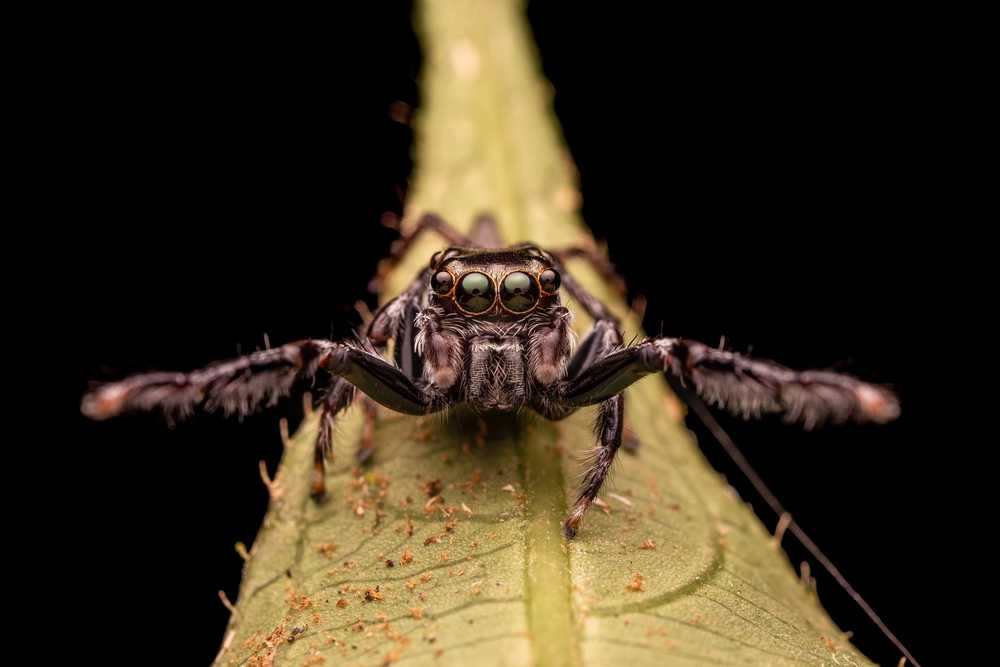
Jumping spiders are relatively easy to identify once you know their characteristics. These adult jumping spiders typically range in size from 1 to 22 millimeters, and their adult jumping spiders range is known for their compact and robust body shape. Their eye arrangement is one of the most distinctive features. They have eight eyes in three rows, with a very large middle pair in front, giving them excellent vision.
The coloration and patterns of jumping spiders vary widely depending on the species of jumping spiders. Bold jumping spiders, for example, are often recognized by their black coloring with white spots. Other species might display a variety of bright colors and patterns, including shades of black, brown, tan, gray, and markings in white, gray, yellow, red, blue, or green.
In addition to their eye arrangement and coloration, jumping spiders are identified by their dense hairs and relatively short legs. These characteristics, combined with their unique jumping behavior, make them one of the most easily recognizable spider species.
Where Do Jumping Spiders Live?
Jumping spiders are highly adaptable and inhabit various environments. They prefer outdoor environments with vegetation and sunlight, like grasslands and prairies. These spiders are often seen on shrubs, flowers, and other vegetation while hunting for prey.
Jumping spiders may reside in leaf litter or beneath rocks and logs in outdoor settings. Their adaptability also allows them to thrive in urban areas. You might find jumping spiders on exterior walls of buildings, in gardens, or even inside homes. Common indoor locations include drapery folds and between books.
Whether outside or inside, jumping spiders are skilled hunters that maximize their surroundings. Their adaptability makes them a common sight in many different habitats.
Preventing Jumping Spider Infestations
Seal gaps around your home to prevent jumping spider infestations. Properly sealing door and window molding, utility pipes, and other entry points significantly reduces the entry points for these spiders. This simple step can make a big difference in keeping your home spider-free.
Trim back vegetation near your home to further prevent infestations. Jumping spiders often use overhanging branches and shrubs as pathways indoors. Well-maintained vegetation reduces the likelihood of spiders entering your home.
Regular vacuuming is also essential. This helps eliminate jumping spiders, their webs, and any egg sacs present in your living space. Using sticky traps in areas with high spider activity can effectively catch jumping spiders and help monitor their population.
If spider activity significantly increases, consider professional pest control services.
When to Call Professional Pest Control
Professional pest control services may become necessary for managing jumping spider populations. If spiders frequently enter through openings like broken screens or unsealed vents, contact pest control services.
Spiders often inhabit dark, cluttered areas like attics and basements. Regular inspections of these locations can identify signs of spider activity and prevent infestations. Numerous spider webs and egg sacs may indicate a serious problem with other spiders requiring professional intervention.
While jumping spiders are venomous, their bites are generally harmless to humans. Understanding the symptoms and proper treatment of jumping spider bites can help alleviate any concerns. Identifying these spiders and knowing where they live can also aid in preventing infestations.
By taking preventive measures, such as sealing gaps and trimming vegetation, you can reduce the likelihood of encountering jumping spiders in your home. If you ever find yourself dealing with a significant spider problem, don’t hesitate to call for professional assistance. Stay informed, stay safe, and enjoy the fascinating world of jumping spiders without fear.
Frequently Asked Questions
Is it safe to hold a jumping spider?
Yes, it is generally safe to hold a jumping spider if you handle it carefully and avoid disturbing it when it’s in premolt. Just be aware that a bite might feel like a bee sting and watch for any allergic reactions.
What happens if a jumping spider bites you?
A jumping spider bite may cause mild symptoms like redness, itching, and swelling, but they are not venomous. To alleviate discomfort, clean the bite area and apply a cold compress.
What are the symptoms of a jumping spider bite?
A jumping spider bite typically causes symptoms like redness, itching, stinging, and mild swelling, resembling a mosquito bite. It’s usually not serious but can be uncomfortable.
How can I treat a jumping spider bite?
To treat a jumping spider bite, wash the area with soap and water, apply a cold compress, and take over-the-counter pain relievers if needed. Seek medical attention if you experience severe symptoms.
Are jumping spiders poisonous to humans?
Jumping spiders are venomous but not poisonous to humans, as their bites are generally harmless. You can feel safe observing them in the wild.