Giant House Spider: How to Spot and Handle Them Indoors
Massive house spiders are among the largest and most noticeable spiders you can encounter inside your home. If you live in northern Europe or other European countries, you might come across these impressive arachnids in dark corners or quiet areas. This article will help you identify the massive house spider, understand its behavior, assess any risks it may pose, and learn effective ways to manage their presence indoors.
- Giant house spiders, also known as Tegenaria gigantea or the larger cousin of common house spiders, are easily identifiable due to their large size, dark brown to black coloration, and preference for hiding in dark, undisturbed areas such as window angles, door frames, basements, and storage sheds.
- Despite their intimidating appearance and eight legs, giant house spiders are generally harmless to humans, with infrequent bites that are usually mild and resolve without significant medical intervention.
- Preventing giant house spider infestations involves sealing entry points around window and door frames, reducing indoor attractants, and considering professional pest management solutions for effective control.
Identifying Giant House Spiders
Encountering giant house spiders indoors can be startling due to their size and highly variable appearance. Their long legs and brown coloration make them easily distinguishable from other common house spiders and hobo spiders. Their large size, while intimidating, is a key feature for identification.
Giant house spiders prefer dark, undisturbed areas inside homes. They are frequently found in basements, garages, dark corners of rooms, and other structures like storage sheds, blending into their surroundings. Identifying these habitats aids in effectively spotting and managing these spiders.
Physical Characteristics
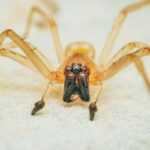
A leg span of up to 2 inches makes the giant house spider easily identifiable. The average body length is around ¾ inches, making it one of the largest spiders you might find indoors. Their coloration typically ranges from dark brown to black, with some displaying patterns of gray or black on their abdomen.
These spiders are notably fast, capable of sprinting at speeds of up to 1.7 feet per second, ranking among the fastest invertebrates. This speed, combined with their large size and dark coloration, often contributes to the alarm they cause when seen darting across a room.
Male and female giant house spiders have subtle but notable differences. While both have long legs, males may have slightly longer legs compared to females. Adapted to dark areas, these spiders often construct webs with a funnel-like hole at one end where they wait for prey.
Common Habitats
Quiet areas of the house, including basements, garages, dark corners, window angles, and door frames, are common habitats for giant house spiders. They can often be seen on the floor in these less disturbed areas, blending in with their surroundings. These locations provide the seclusion and darkness that giant house spiders prefer.
Sinks and bathtubs often trap giant house spiders as they search for moisture. Their inability to climb smooth surfaces often leads to these accidental entrapments, making these areas common spots for unexpected spider sightings.
Behavior and Habits of Giant House Spiders
Generally elusive, giant house spiders prefer to hide and avoid human contact during the day. When startled, they are quick to run away, often disappearing into dark corners or behind furniture. They avoid confrontation and seek out secluded areas within the home.
These spiders thrive in dark, undisturbed environments, making a tidy home less inviting. Regular tidying and decluttering minimize their presence by reducing the number of dark, secluded areas.
Nocturnal Activity
Giant house spiders are primarily nocturnal, becoming most active at night when they hunt and roam for insects and other prey. Increased nighttime activity likely helps them avoid predators and take advantage of cooler temperatures. During the day, they remain hidden in dark, secluded areas, constructing messy webs with a funnel shape where they can lie in wait for prey.
These nocturnal habits mean that you are more likely to encounter giant house spiders during the evening or early morning hours. Awareness of their nocturnal habits is crucial for effective management.
Mating Season
Increased indoor sightings of giant house spiders occur during their late summer and early autumn mating season. During this period, males actively seek out chosen females, which often brings them out of their usual hiding spots and into more visible areas of the home.
After mating, it is not uncommon for females to eat the males, a behavior observed in several spider species. This period of increased activity and visibility is temporary, typically subsiding once the mating season concludes.
Are Giant House Spiders Dangerous?
Despite their large size, giant house spiders are generally harmless to humans. Their bites are not dangerous due to the low venom toxicity. These spiders usually flee rather than confront threats, making them less dangerous than their appearance suggests.
Biting incidents are infrequent and usually not severe. Their non-aggressive nature and preference for avoiding humans further reduce the likelihood that they will bite humans.
Venom Toxicity
In most cases, the venom of giant house spiders is not harmful to humans. Most people do not experience serious effects from their bites due to the low toxicity of the venom. However, individuals with specific allergies may react to their bites, although such cases are rare.
Unlike some other spider species, their venom poses little to no risk to humans. This makes them more of a nuisance than a true threat.
Bite Incidents
Incidents of bites from giant house spiders are rare. When they do occur, bites are generally mild and resolve without significant medical intervention. These spiders prefer to hide or escape rather than bite when threatened.
For individuals with specific allergies, reactions to bites may be more pronounced, but such cases are uncommon. The overall rarity and mild nature of bites make giant house spiders a low-risk concern for most people.
Preventing Giant House Spider Infestations
Preventing giant house spider infestations is key to maintaining a comfortable, pest-free home. Well-lit indoor areas and yellow outdoor light bulbs make the environment less appealing to these spiders. Understanding the benefits of having these spiders, such as their role in controlling pest populations, can also help homeowners manage their presence more effectively.
Reducing attractants and sealing entry points are crucial steps in prevention. By taking proactive measures, you can significantly reduce the likelihood of encountering giant house spiders in your home.
Sealing Entry Points
Sealing entry points around your home keeps giant house spiders out. Common entry points include gaps around window and door frames, rips in screens, and cracks in the foundation or weather-stripping. Filling these gaps with caulk effectively blocks potential spider entry.
Regularly checking and maintaining seals ensures effectiveness against spider invasions. By addressing these vulnerabilities, you can create a barrier that prevents giant house spiders from entering your home.
Reducing Indoor Attractants
Reducing indoor attractants is also crucial for prevention. Sticky traps effectively capture and reduce spider numbers. Effective treatment plans may include a combination of chemical treatments and habitat modifications to lower spider populations.
Protective barriers and reduced clutter make your home less appealing to giant house spiders. By minimizing their preferred environments, you can help prevent infestations.
Professional Pest Management Solutions
Professional pest control services ensure expert treatment of giant house spider problems. Trained experts utilize specialized techniques for effective elimination and employ minimally invasive methods to remove spiders while ensuring they remain in their natural habitats. These services often use integrated pest management strategies for effective control.
Professional pest control benefits extend beyond just eliminating spiders. These services provide a comprehensive approach to managing infestations, ensuring a comfortable and pest-free home environment.
Treatment Plans
Customized treatment plans, based on assessments, ensure effective removal and prevention. These plans provide a systematic approach to eliminating existing spiders and preventing future infestations.
Understanding giant house spiders, from their identification and behavior to the risks they pose and prevention strategies, is essential for maintaining a comfortable home. While these spiders may appear intimidating, they are generally harmless and can even benefit households by controlling pest populations.
For those who prefer a more thorough approach, professional pest management services offer expert solutions tailored to your home’s needs.
Frequently Asked Questions
What should I do if I see a big spider?
If you encounter a big spider, you may choose to either move it outside or use a vacuum to safely remove it, as spiders prefer dark, cluttered areas. Ensuring your space is tidy can help prevent their presence in the future.
Are giant house spiders beneficial?
Giant house spiders are beneficial and should be left undisturbed, as they help control other pest populations. It is advisable to use mechanical measures for control indoors rather than resorting to chemical methods.
Is a giant house spider poisonous?
Giant house spiders are not poisonous; they have little to no venom toxicity and tend to avoid human interaction. Their large size may be intimidating, but they are generally harmless.
How can I identify a giant house spider?
To identify a giant house spider, look for a large size, long legs, and a dark brown coloration, typically found in dark, undisturbed areas of your home such as window angles and door frames. If these characteristics match, it is likely a giant house spider.
Are giant house spiders dangerous to humans?
Giant house spiders are generally harmless to humans, as their bites are rare and their venom is of low toxicity. Therefore, they pose little threat to human safety.