Top Types of Beetles in House and How to Deal With Them
Wondering which beetles you might find in your home and how to handle them? Some beetles are harmless accidental visitors, while others can damage fabrics, wood, or stored food. This article explains the most common household beetles, how to identify them, and how to help prevent infestations.
- Understanding the types of beetles found in homes can help with identification and control.
- Proper sanitation, sealed food storage, and sealed entry points can help reduce the risk of beetle infestations.
- When infestations become severe, professional pest control can provide targeted solutions to eliminate beetle problems.
Common Beetles Found Inside Homes
Not every beetle found indoors is a serious pest. Some, like ground beetles or lady beetles, may wander inside by accident and do not usually infest the home. Others, such as carpet beetles, wood-boring beetles, and pantry beetles, can become more serious problems because they damage fabrics, wood, or stored food.
The key is to identify whether the beetle is an occasional indoor visitor or a pest that has found food, shelter, or breeding conditions inside your home. Once you know the difference, it becomes much easier to choose the right control approach.
Identifying Carpet Beetles
Carpet beetles are small, oval-shaped insects that may appear black, brown, or mottled with lighter patterns. Adults are often found near windows or light fixtures, while the larvae are the stage that causes damage. Carpet beetle larvae are small, hairy, and worm-like. They feed on materials such as wool, silk, fur, feathers, and other natural fibers.
Damaged rugs, clothing, upholstery, stored fabrics, or shed larval skins are all signs of carpet beetle problems. Regular vacuuming and cleaning can help with minor activity, but heavier infestations may require professional treatment.
Recognizing Wood Boring Beetles
Wood-boring beetles can damage wooden furniture, flooring, paneling, and other structural or decorative wood materials. Common types include powderpost beetles, deathwatch beetles, and false powderpost beetles. The damage is usually caused by the larvae, which tunnel through wood and leave behind small exit holes and fine, powdery frass.
If you notice pinholes in wood surfaces or powder collecting beneath wood items, a wood-boring beetle infestation may be present. Because these pests can continue damaging wood over time, early identification and targeted treatment are important.
Understanding Grain Beetles
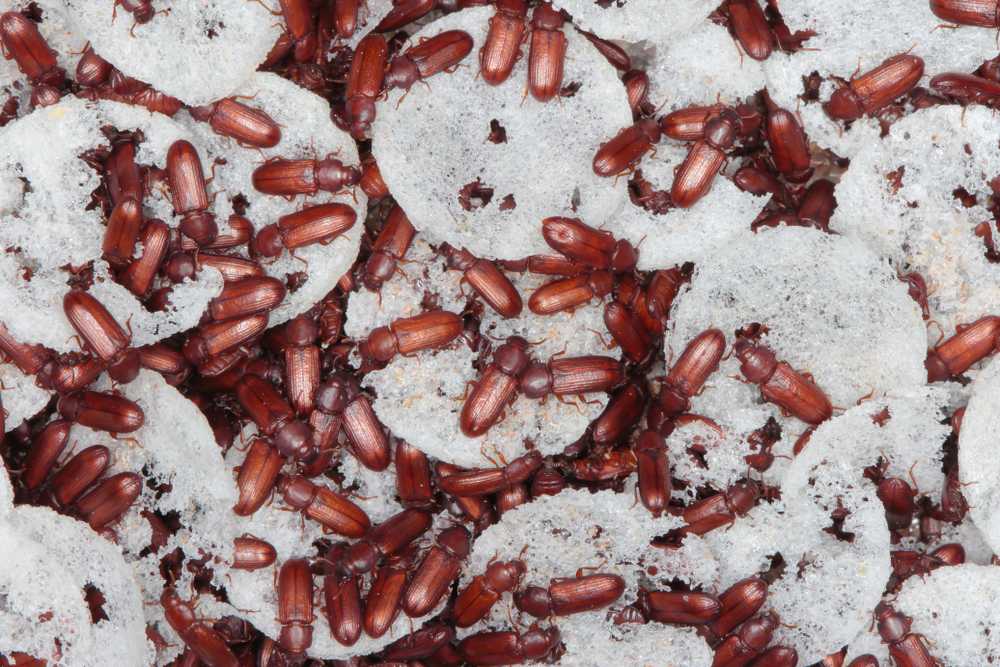
Grain beetles are pantry pests that infest stored food items such as grains, cereals, rice, flour, oats, pasta, spices, and dry pet food. These beetles reproduce quickly, which is why a small problem can spread through a pantry in a short time.
Weevils and similar pantry beetles are especially common in improperly sealed food packages. Regular pantry inspections and storing dry goods in sealed containers can help prevent infestations and protect food supplies.
Spotting Drugstore Beetles and Cigarette Beetles
Drugstore beetles and cigarette beetles are small, brown pantry pests that are often confused because they look very similar. Both can infest dried foods and household goods, including cereals, spices, flour, pet food, and other stored items.
Drugstore beetles are slightly more cylindrical and have clubbed antennae, while cigarette beetles are rounder and have a smoother appearance. Even though the differences are small, both should be treated as pantry pests and handled by removing infested items, cleaning shelves, and improving food storage.
Preventing Beetle Infestations
Preventing beetle infestations starts with good sanitation and regular inspection. Vacuum carpets, rugs, baseboards, and upholstery often, especially in low-traffic areas where debris and fabric fibers can collect. Store dry foods in sealed containers, discard infested items promptly, and inspect pantry goods before bringing them into the home.
It also helps to seal cracks, repair damaged screens, and close gaps around doors, windows, and utility openings. Keeping storage areas clean, reducing clutter, and checking wood materials for signs of damage can also help limit beetle activity indoors.
Natural Pest Control Solutions
Natural pest control methods may help reduce minor beetle activity, especially when paired with good cleaning habits. Regular vacuuming, proper food storage, and removing infested materials are often the most effective first steps. In some cases, natural repellents may help discourage beetles, but sanitation and exclusion are usually more reliable than scent-based solutions alone.
If beetles continue appearing after cleaning and prevention efforts, the infestation may be larger or more established than it seems. At that point, professional inspection may be the most effective next step.
When to Call a Professional
Some beetle problems can be handled with cleaning and prevention, but professional help may be needed when infestations are widespread, recurring, or causing damage to fabrics, wood, or stored food. A pest control professional can identify the beetle species, locate the source of the infestation, and recommend a treatment plan based on the specific problem in your home.
Household beetles can range from harmless accidental visitors to pests that damage fabrics, wood, or stored food. Identifying the type of beetle is the first step in deciding whether simple cleaning and prevention will solve the problem or whether more targeted treatment is needed.
By keeping your home clean, storing food properly, sealing entry points, and watching for early signs of activity, you can reduce the risk of beetle infestations. When beetle problems become persistent or damaging, professional pest control can help restore your home and prevent the issue from spreading.
Frequently Asked Questions
What are the signs of a carpet beetle infestation?
The signs of a carpet beetle infestation include bare patches on wool rugs, damaged wool clothing, and the presence of shed larvae skins in hidden areas. Taking immediate action is essential to prevent further damage.
How can I prevent beetle infestations in my home?
To prevent beetle infestations in your home, focus on maintaining cleanliness by regularly vacuuming and sealing food in airtight containers, while also ensuring to seal cracks and entry points. These proactive measures will help create an inhospitable environment for beetles.
What natural methods can I use to control beetle populations?
You can effectively control beetle populations by using natural repellents such as peppermint oil and cloves, while also maintaining cleanliness and proper food storage to deter infestations. Implementing these methods will help keep your space beetle-free.
When should I call Las Vegas Pest Control for a beetle infestation?