Understanding the Size of Carpet Beetles | Identification & Insights
Carpet beetles are tiny pests, but they can still cause noticeable damage to fabrics, natural fibers, and stored items. Their small size makes them easy to overlook until an infestation is already underway. This article explains how large carpet beetles are, how to identify adults and larvae, where they are commonly found, and what signs can help you catch an infestation early.
- Adult carpet beetles are small, usually measuring about 2 to 5 mm, while larvae grow larger and cause most of the damage.
- Carpet beetles go through four life stages: egg, larva, pupa, and adult.
- Early signs of infestation include shed skins, fecal pellets, and damage to fabrics or stored natural materials.
Carpet Beetle Size and Appearance
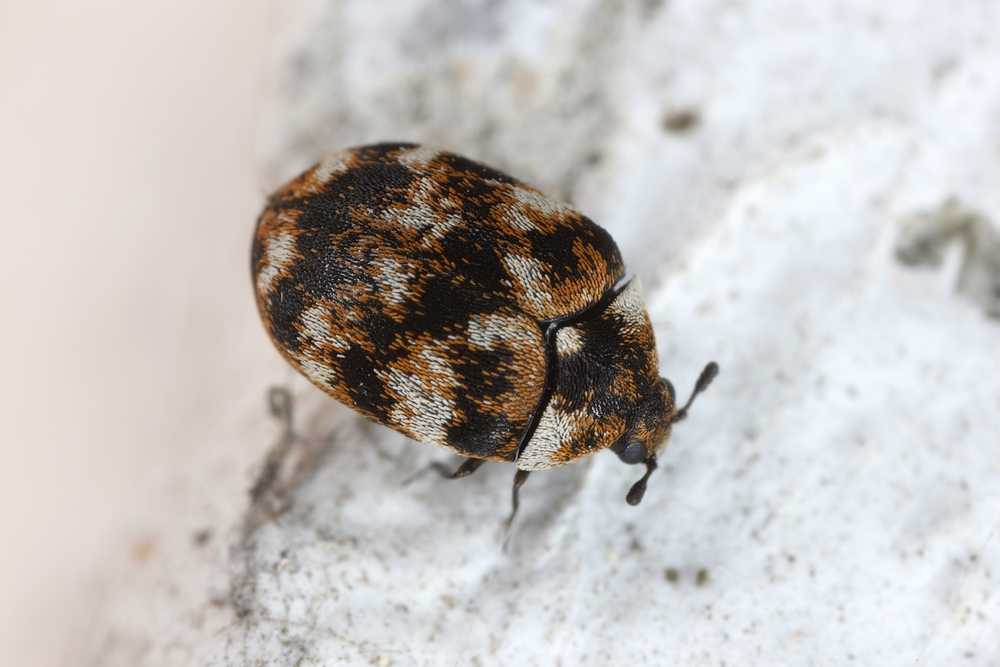
Carpet beetles are small insects that can be difficult to notice until activity becomes more obvious. Adults usually measure between 2 and 5 mm in length and often appear oval-shaped with dark coloring or mottled patterns. Their small size and varied coloring can make them easy to miss, especially near windows, baseboards, or light sources.
Larvae are larger than adults and are usually more damaging. They are often light brown to darker brown, segmented, and covered with short hairs, which gives them a bristly appearance. Because adults and larvae look so different, recognizing both stages is important when identifying a carpet beetle problem.
Adult Carpet Beetles
Adult carpet beetles are typically small, oval-shaped insects that range from 2 to 5 mm in length. Their coloring often varies from dark brown to black, sometimes with mottled lighter patterns or colored scales. They are also strong fliers and may move easily between windows, rooms, and stored materials.
Adults are often found near windows because they are attracted to light. They mainly feed on pollen and nectar outdoors, but they lay eggs in places where larvae will have access to natural fibers and organic materials indoors.
Carpet Beetle Larvae
Carpet beetle larvae are often more noticeable once damage begins. They can grow up to about 1/2 inch long and usually appear light brown to brown with a segmented, hairy body. Unlike adults, larvae do the most harm because they feed on natural materials such as wool, fur, silk, feathers, lint, and pet hair.
Larvae often stay hidden in dark, undisturbed places such as closets, under furniture, beneath rugs, or inside stored textiles. Their feeding can damage clothing, upholstery, and other fabric items if the infestation is not caught early.
Life Cycle and Size Stages
Carpet beetles pass through four life stages:
- eggs
- larvae
- pupae
- adults
The full life cycle may last from several months to more than a year, depending on the species and environmental conditions. The larval stage is usually the longest and most destructive, which is why homeowners often notice damage before they see adult beetles. Understanding how carpet beetles change in size and appearance through each stage can make identification much easier.
Eggs
Carpet beetle eggs are tiny, white, and oval-shaped, usually measuring about 1 mm long. Females often lay them in dark, quiet places where larvae will have easy access to food sources such as wool, hair, feathers, or stored natural materials.
Because these eggs are so small and well hidden, they are difficult to spot without a close inspection. They usually hatch within about two weeks under favorable conditions.
Larval Stage
The larval stage is the longest part of the carpet beetle life cycle and the stage responsible for most of the damage. Depending on the environment, larvae may remain in this stage for several months while feeding on natural fibers, lint, pet hair, feathers, and other organic materials.
One reason larvae are difficult to eliminate is that they can survive in hidden places and go for long periods with limited food. This makes early detection especially important when trying to stop an infestation before it spreads.
Pupae
Before becoming adults, carpet beetle larvae enter the pupal stage. During this stage, they do not feed and remain hidden while they transform into adult beetles. Pupae are usually found in the same quiet, undisturbed locations where larvae were feeding.
Although this stage lasts only a short time compared with the larval stage, it is still part of the life cycle that can be missed during treatment if hidden areas are not inspected carefully.
Adult Stage
Adult carpet beetles usually emerge in spring or summer. Once they mature, they are often seen near windows, light fixtures, or other bright areas indoors. Unlike larvae, adults do not damage fabrics directly, but they are responsible for laying eggs and starting the cycle again.
Because adults can fly easily, they may spread through different areas of the home or enter from outdoors. Their presence often signals that larvae may be hidden somewhere nearby.
Where Carpet Beetles are Commonly Found
Carpet beetles can be found both indoors and outdoors. Indoors, they are often discovered in closets, bedrooms, pantries, storage areas, under furniture, and near windows. Larvae tend to stay in darker, more protected spaces where fabric, lint, hair, or other organic material collects.
Outdoors, adult carpet beetles are often seen in gardens and plant-rich areas where they feed on pollen and nectar. Larvae may develop in bird nests, rodent nests, and other hidden outdoor spaces with natural debris. Understanding where carpet beetles are most likely to appear can make inspection and prevention more effective.
Signs of Carpet Beetle Infestation
Catching a carpet beetle infestation early can help prevent serious damage to fabrics and stored items. Some of the most common warning signs include:
- shed larval skins
- small fecal pellets
- damage to rugs, clothing, upholstery, or stored fabrics
- repeated sightings of adult beetles near windows or light sources
These signs often appear before the infestation becomes obvious, so regular inspection of storage and fabric-heavy areas can help you respond earlier.
Shed Skins and Feces
Carpet beetle larvae shed their skins as they grow, often leaving them behind in hidden places such as closets, under furniture, or along baseboards. These cast skins are one of the clearest signs that larvae have been active in the area.
Small fecal pellets may also appear where larvae are feeding. Finding shed skins and droppings together is often a strong indication that carpet beetles are established nearby.
Fabric Damage
Carpet beetle larvae can damage natural fibers such as wool, silk, fur, feathers, and similar materials. This damage often appears as small holes, thinned patches, or irregular worn-looking spots in clothing, rugs, upholstery, or stored fabrics.
Because this kind of damage can resemble normal wear, it is important to look for other signs, such as larvae, shed skins, or fecal pellets, before assuming the cause.
Prevention and Control Measures
Preventing and controlling carpet beetles usually requires regular cleaning, careful inspection, and reducing the food sources that allow larvae to survive. Vacuuming rugs, closets, upholstery, and hidden corners can help remove eggs, larvae, and debris that support infestations.
In many cases, effective control includes:
- regular vacuuming
- cleaning stored fabrics and clothing
- reducing lint, pet hair, and dust buildup
- inspecting quiet or low-traffic storage areas
- calling professional pest control for severe infestations
Taking these steps early can make it much easier to stop a small problem before it becomes widespread.
Cleaning and Vacuuming
Cleaning and vacuuming are some of the most effective ways to reduce carpet beetle activity. Regular vacuuming can remove larvae, eggs, pet hair, lint, and other debris that serve as food sources. Paying close attention to rugs, closets, baseboards, upholstered furniture, and hidden corners can make a big difference.
Deep cleaning stored fabrics and rarely used areas is especially important because infestations often develop in places that are not disturbed often.
Professional Pest Control
When infestations are widespread or continue after cleaning efforts, professional pest control may be the best option. Professionals can inspect hidden areas, confirm the extent of the infestation, and apply targeted treatments that are harder to achieve with basic DIY methods.
This can be especially helpful when carpet beetles are affecting multiple rooms, valuable fabrics, or hard-to-reach storage areas.
Protecting Your Home from Carpet Beetles
Understanding carpet beetle size, life stages, and common signs of infestation can make these pests easier to identify before they cause more serious damage. Regular cleaning, inspection, and early control steps can help reduce the risk of long-term problems.
When infestations become larger or harder to manage, professional treatment may be the most effective way to protect your home and belongings.
Frequently Asked Questions
What are the physical characteristics of adult carpet beetles?
Adult carpet beetles exhibit an oval shape, measuring between 2 to 5 mm in size, and their coloration varies from dark brown to black, often adorned with colored scales.
How long does the larval stage of carpet beetles last?
The larval stage of carpet beetles typically lasts between 65 and 320 days, during which they consume natural fibers and organic materials.
Where are carpet beetles commonly found indoors?
Carpet beetles are commonly found indoors in bright areas like closets, pantries, and bedrooms. Their presence may also extend to warehouses, storerooms, and museums.
What are the signs of a carpet beetle infestation?
The signs of a carpet beetle infestation include shed skins, irregularly shaped fecal pellets, and noticeable damage to fabrics in the form of small holes. Addressing these indicators promptly is crucial to prevent further damage.
How can professional pest control services help with carpet beetle infestations?
Professional pest control services can effectively manage carpet beetle infestations through specialized treatments, such as fumigation, targeting hard-to-reach areas. This ensures a thorough and lasting solution for maintaining a pest-free environment in your home.