Top Tips for Finding Mice Entry Points in Your Home
Discovering how to find mice entry points is crucial to stopping infestations. This guide provides clear steps to identify where mice are getting in and how to block these entry points.
Identifying Signs of Mice
The first step in addressing a mouse problem is to look for signs of activity that point to how mice are getting inside. Common clues include droppings, gnaw marks, and grease trails along surfaces they travel.
Grab a flashlight and inspect the foundation, roofline, and areas where pipes and vents enter your home. Even small gaps around plumbing or cracks in the foundation can be enough for mice to squeeze through.
Mouse Droppings and Gnaw Marks
One of the clearest indicators of mouse activity is the presence of mouse droppings and gnaw marks. Mouse droppings can often be found along walls, in kitchen cabinets, or under sinks. These droppings are small, dark, and pellet-shaped.
In addition to droppings, look for gnaw marks on wood, wires, and other materials. Mice gnaw on various objects to keep their teeth sharp and to gain access to food sources. Identifying these signs helps locate potential mouse entry points, allowing you to take appropriate measures to seal them.
Nocturnal Sounds
Mice are most active at night, so scratching or scurrying sounds can help you narrow down where they’re moving. Listen near walls, ceilings, and quiet spaces like attics, basements, and behind appliances, since these noises can indicate hidden travel routes or nesting areas.
Grease Marks
Grease marks are dark smudges left behind as mice repeatedly travel along the same paths. These marks come from oils and dirt in their fur and can appear along baseboards, walls, and narrow openings. Tracking these streaks can help you identify the routes mice use most often.
Inspecting Common Entry Points
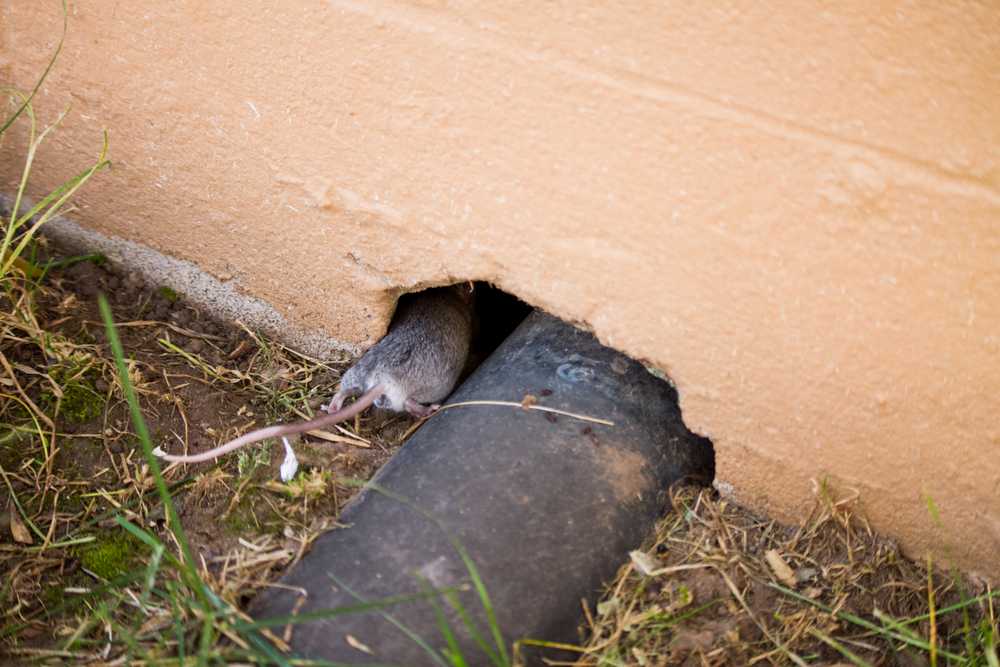
Mice often enter through small openings around foundations, doors, vents, and utility lines. Start by checking around utility and gas lines, cable lines, and electrical wiring for gaps where they enter the home, since these areas are easy to overlook but commonly used as access points.
Next, inspect dryer vents and air conditioning units for cracks or openings around vent covers, and seal any gaps you find. Finally, examine garage doors and door corners for small openings along the edges and underneath. Fill gaps with caulk or appropriate materials and repair worn seals as needed to keep mice from squeezing inside.
Conducting a Thorough Indoor Inspection
After checking the exterior, inspect indoor areas near food, water, and hidden voids where mice travel and nest. Start under sinks and inside kitchen cabinets, looking for gaps around plumbing, corners, and back panels. Watch for droppings, gnaw marks, or shredded material that could indicate nesting, and pay close attention to where cabinets meet walls or floors.
Next, check crawl spaces and wall voids for small openings mice can use to move through the home. Look for gaps near vents, pipes, and framing, along with nesting material or greasy rub marks. Seal any openings you find to prevent continued access and reduce the chance of reinfestation.
Sealing Potential Entry Points
Once you’ve identified where mice are getting in, seal those gaps quickly to prevent reinfestation. Focus on closing small openings first, since mice can squeeze through surprisingly tight spaces.
For small gaps around pipes, cracks, and holes near walls or floors, pack the opening with steel wool and seal it with caulk to hold it in place. For larger openings, use metal mesh before sealing to create a stronger, chew-resistant barrier.
Next, replace worn weather stripping and repair damaged seals, especially around exterior and garage doors, where gaps are common. If needed, add metal sheeting or kick plates in areas prone to chewing.
Finally, repair structural vulnerabilities such as foundation cracks, damaged siding, or gaps around utility lines. Pair sealing with strategic trapping by placing traps along walls, in corners, behind appliances, and near suspected entry points. Check traps regularly and adjust placement based on where activity continues.
Preventative Measures and Maintenance
Preventative measures and regular maintenance are essential to keep mice out of your home. Maintaining a clean home, storing food properly, and regularly inspecting your property can significantly reduce the chances of a mouse infestation.
This section will provide you with practical tips to prevent future infestations and ensure your home remains secure from rodents.
Store Food Properly and Maintain Cleanliness
Food should be stored in durable containers to prevent access by rodents. Mice are attracted to unsealed food items, so keeping food in tightly sealed containers is essential. Regularly cleaning kitchen surfaces prevents crumbs that may lure mice.
Properly storing food is vital to prevent mice from being attracted to your home. Combining proper food storage with regular cleanliness can significantly reduce the chances of mice infestation.
Regularly Inspect and Maintain Property
It is recommended to check your property for new entry points around once a month. Regular inspections of your property are crucial to identify and seal suspected entry points and potential entry points for mice.
Regular inspections and property maintenance prevent future rodent infestation and ensure your home remains secure from rodents.
Manage Yard Debris and Leaf Piles
Piles of leaves, unkempt bushes, and leftover food provide shelter and food for mice, creating perfect hiding spots. Keeping your yard clean and free of debris is essential in reducing the likelihood of a mouse infestation.
Regularly clear out leaves and debris, trim bushes, and maintain a tidy yard to deter mice from nesting nearby. Effectively managing yard debris eliminates potential hiding spots for mice and protects your home.
When to Call A Professional
Sometimes a mouse problem is too persistent or widespread to handle with DIY steps alone. Mice can contaminate living areas and cause costly damage by chewing wiring, insulation, and pipes. If you keep seeing signs of activity after sealing gaps and setting traps, it’s time to bring in a professional.
Call pest control if you continue to hear scratching, see fresh droppings, notice new gnaw marks, or keep finding mice despite your prevention efforts. Ongoing activity often means there are hidden entry points or nesting areas that haven’t been addressed.
Professional help is also recommended if you suspect contamination from droppings or urine, if anyone in the home has allergies or respiratory sensitivities, or if you notice damage to wiring, insulation, or plumbing. These situations can escalate quickly and may create safety risks that require expert inspection and treatment.
Finding and sealing entry points is one of the most effective ways to prevent mice from returning. Pair that with consistent trapping, proper food storage, and regular inspections to reduce future risk. If activity persists or damage is involved, a pest control professional can locate hidden access points, address nesting areas, and help you restore a safer, rodent-free home.
Frequently Asked Questions
What are the common signs of mice entry points?
Common signs of mice entry points include mouse droppings, gnaw marks, scratching sounds, and grease marks. Identifying these indicators early can help prevent a larger infestation.
How can I seal small entry points for mice?
To effectively seal small entry points for mice, use materials such as steel wool combined with caulk. This combination will create a durable barrier, preventing any future rodent entry.
When should I call pest control professionals for a mouse infestation?
You should call pest control professionals for a mouse infestation when you regularly hear scratching noises, discover new signs of mice, or encounter significant damage or health risks. Timely intervention is crucial to prevent further complications.
Why is it important to store food properly?
Storing food properly is essential to prevent pest infestations, such as mice, which can compromise your home’s hygiene. Sealing food in containers keeps it fresh and safe from contamination.
How often should I inspect my property for mouse entry points?
You should inspect your property for mouse entry points approximately once a month to effectively prevent future infestations. Regular checks will help maintain control over potential entryways.